Ask anyone who has tried to start a clothing brand what the hardest part was, and many will give the same answer: the first order. Traditional manufacturers often require hundreds of units per style and colour before they will start production. For a new label, that means tying up cash in stock that has not been tested with a single customer.
The problem with high minimums
Minimum order quantities (MOQs) exist for good reasons. Setting up a cutting table, dyeing a batch of fabric and adjusting machines all cost the same whether a factory makes fifty pieces or five thousand. Large runs spread that cost thin.
But for small brands, high MOQs create real problems:
- Cash gets locked in inventory. Money spent on unsold sizes cannot be spent on marketing or new designs.
- Size curves are guesswork. Order too many XLs and too few mediums and you are left with dead stock.
- Testing is expensive. Trying a new colour or fit means committing to another full run.
How mixed packs change the maths
A custom pack is a small, pre-defined bundle that you configure yourself: choose the product, then split the units across sizes and colours. Our packs start at 12 pieces, and because we cut and sew in-house, there is no distributor adding a margin between the factory and you.
A worked example
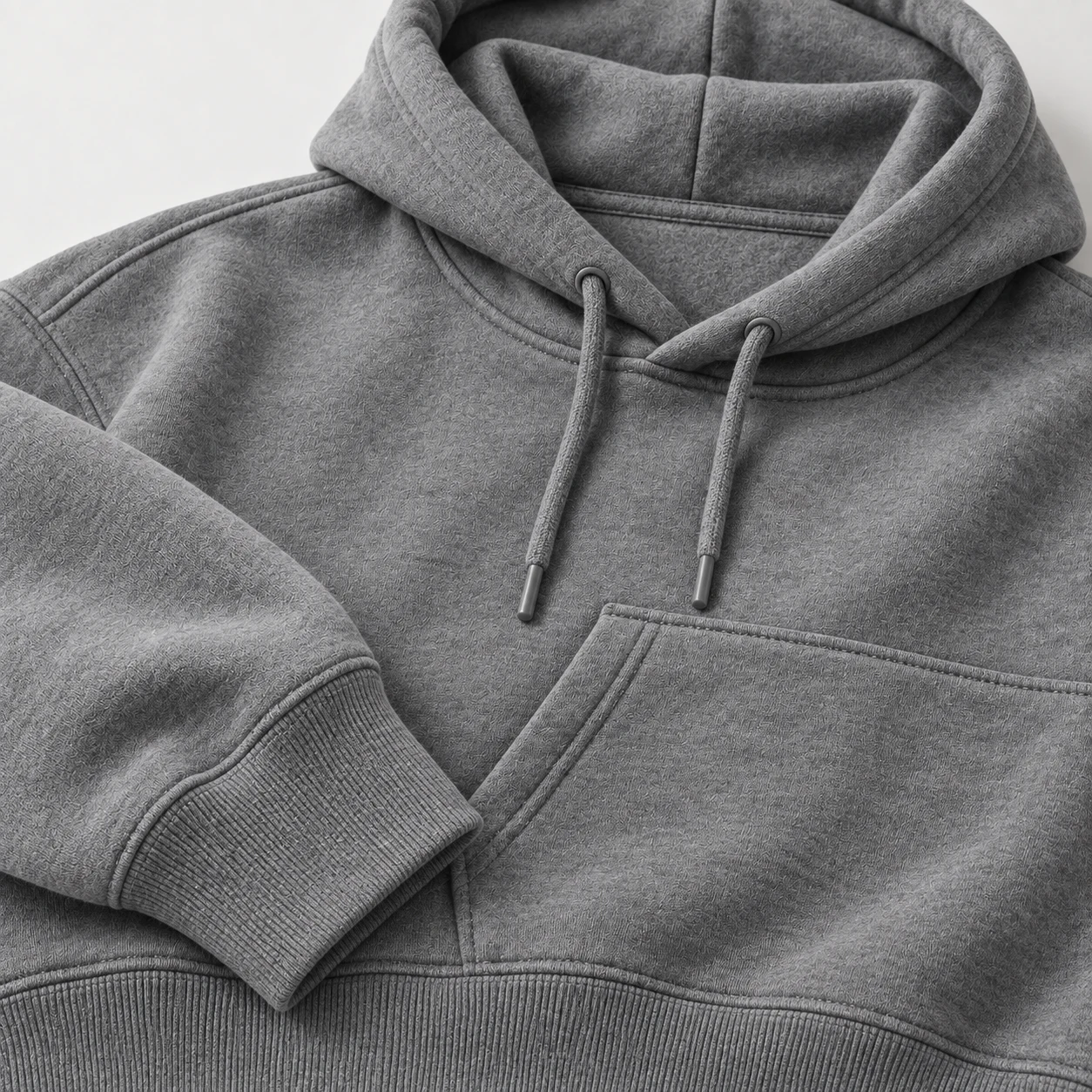
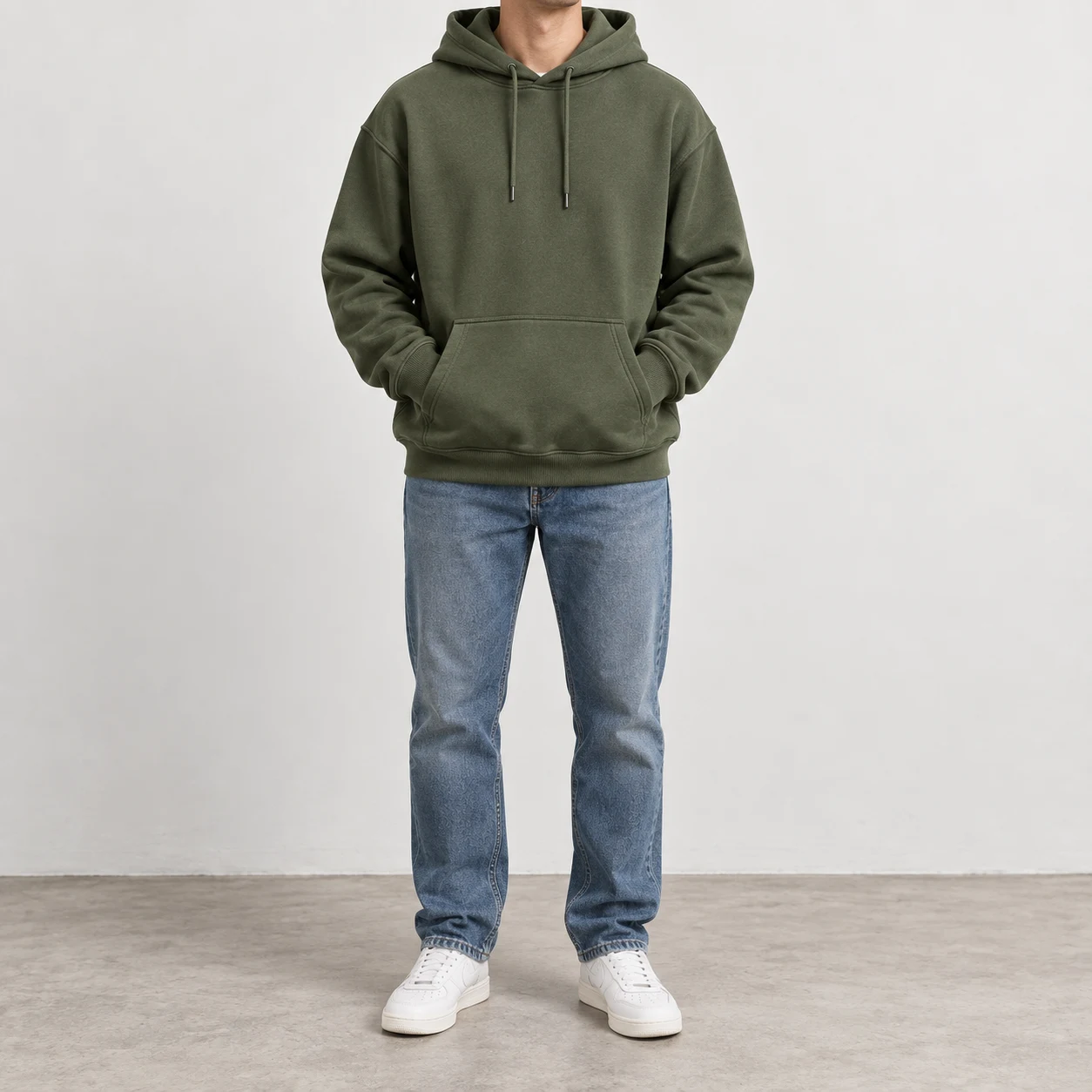
Say you want to launch a heavyweight hoodie in two colours. With a traditional 300-unit MOQ per colour, you would need 600 units before selling one. With mixed packs, a sensible first order could look like this:
| Colour | S | M | L | XL | Total |
|---|---|---|---|---|---|
| Olive | 2 | 4 | 4 | 2 | 12 |
| Black | 2 | 4 | 4 | 2 | 12 |
Twenty-four pieces is enough to photograph, sell through a launch and learn which colour and sizes move fastest. Your second order is then based on real sales data instead of guesses.
Five tips for your first wholesale order
- Order samples first. Check the fabric, fit and finishing yourself before committing to stock.
- Weight your size curve to the middle. For most adult streetwear, M and L sell fastest. Keep S and XL lighter until you know your audience.
- Start with two colours. One core neutral (black, grey or white) and one seasonal colour gives choice without spreading stock thin.
- Plan your reorder point. Decide in advance how many units sold will trigger the next pack, so you never run out of best sellers.
- Factor in shipping. Heavier garments cost more to ship. Ask for volumetric estimates before you set your retail price.
Buying in small, mixed packs turns your first collection into an experiment you can afford to run, and your second collection into a decision backed by data.
Scaling up when you are ready
Packs are not only for launches. Many established brands use them to test new colourways or to restock best sellers between larger production runs. When a style proves itself, moving to larger volumes brings the unit price down further while the pack model stays available for experiments.
If you are planning your first drop, browse our wholesale packs or contact our team for help choosing weights, colours and a size split that suits your market.