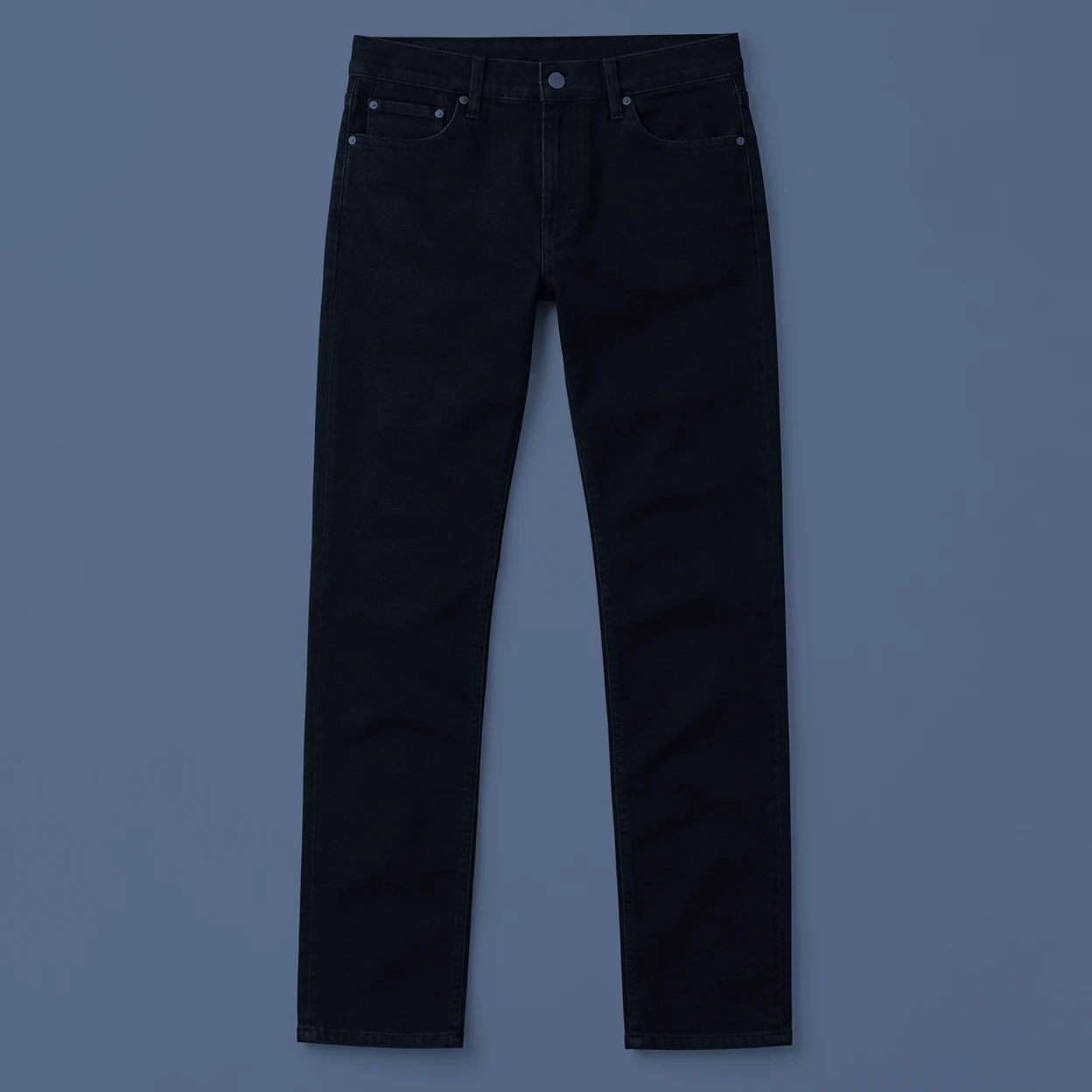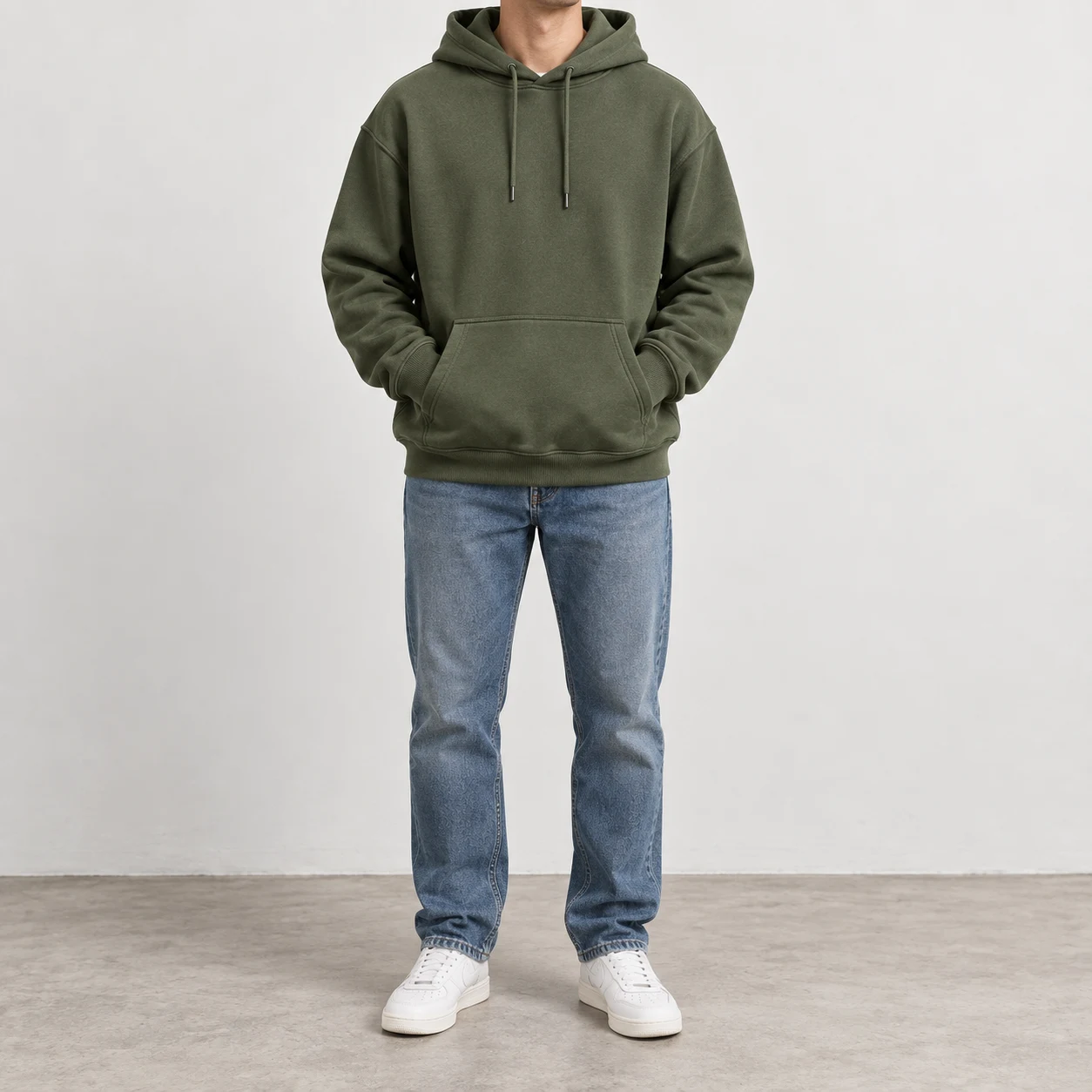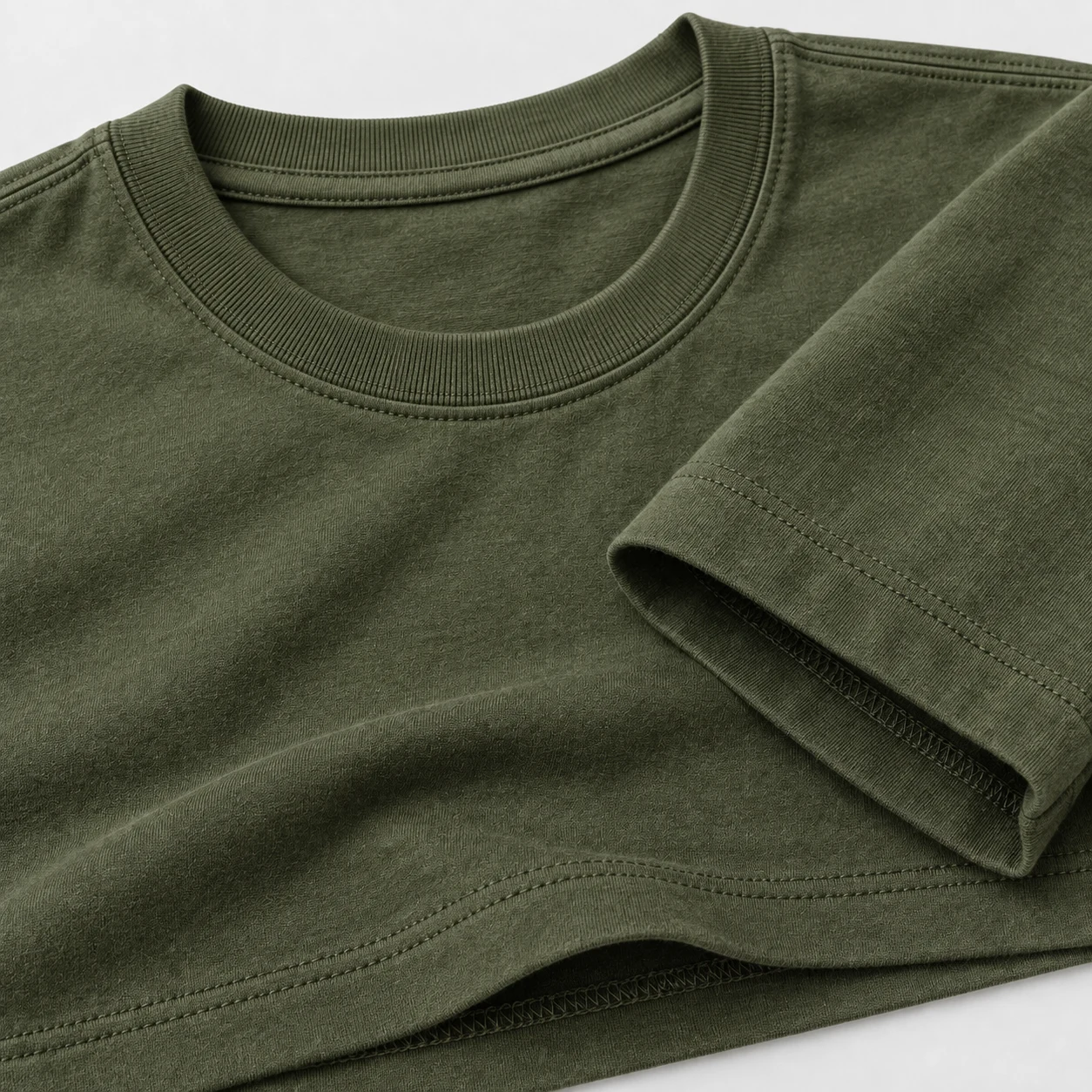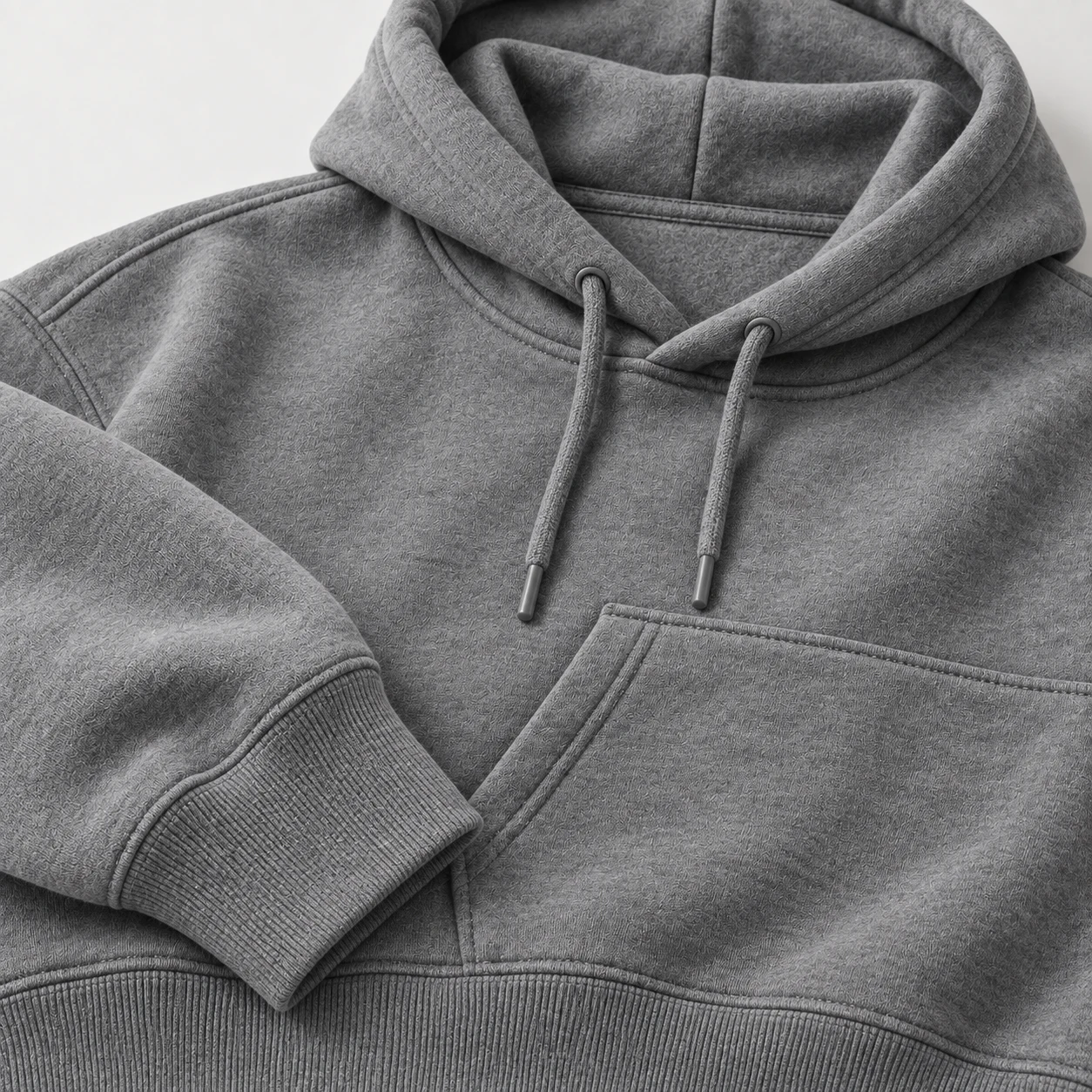
Pick up two plain black t-shirts in a shop and you can usually feel the difference before you read the label. One drapes and holds its shape; the other clings, twists at the side seams and turns slightly see-through under bright light. Most of that difference comes down to one number: GSM.
What GSM actually measures
GSM stands for grams per square metre. It is the weight of one square metre of fabric, and it is the standard way mills and factories describe fabric density around the world. A higher GSM means more fibre packed into the same area, which generally gives a thicker, more opaque and more structured garment.
It is worth remembering what GSM does not tell you. It says nothing about the fibre itself, how the yarn was spun or how the fabric was finished. A heavy fabric made from short, carded cotton can still pill and feel rough. Weight is the starting point, not the whole story.
Recommended weights by garment
These are the ranges we work with on our own production line and the ones most premium streetwear labels use:
| Garment | Lightweight | Midweight | Heavyweight |
|---|---|---|---|
| T-shirt | 140–160 GSM | 180–200 GSM | 220–260 GSM |
| Polo | 180 GSM | 200–220 GSM | 240 GSM |
| Crewneck sweatshirt | 280 GSM | 320–350 GSM | 380–420 GSM |
| Hoodie | 300 GSM | 350–380 GSM | 400–480 GSM |
For a boxy, oversized tee that keeps its shape, 220 GSM is a sensible minimum. For a hoodie that feels substantial without becoming too warm indoors, 400 GSM is a good balance.
Why heavyweight cotton looks better for longer
It holds its silhouette
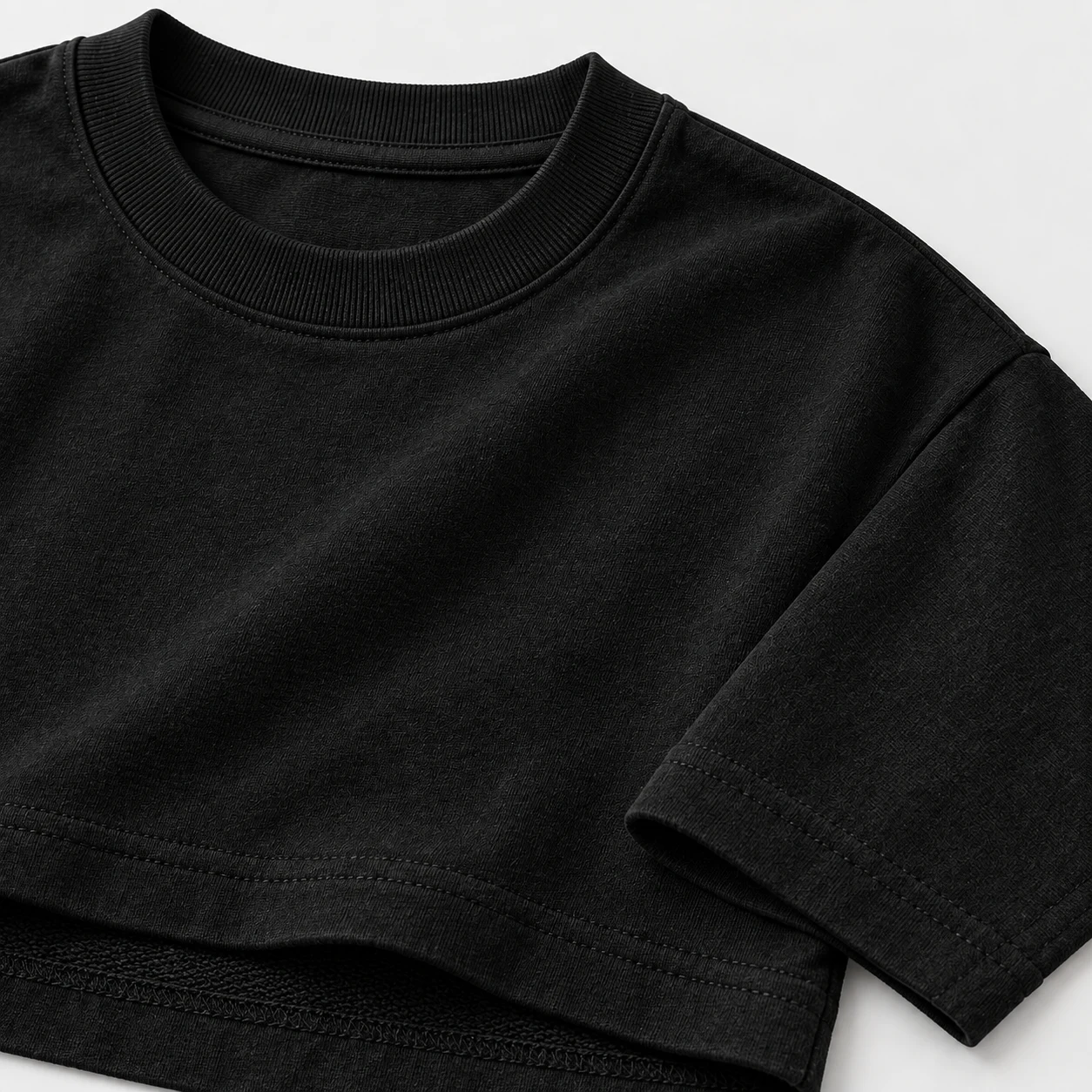
Dense jersey has more body, so it falls away from the torso in clean lines instead of clinging. That is what gives oversized and boxy fits their relaxed, architectural look.
Collars stay flat
The wavy, stretched-out collar often called "bacon neck" happens when a thin rib loses its recovery. A heavier 1x1 rib, ideally with a little elastane and twin-needle stitching, keeps its round shape for many more washes.
Colour stays deeper
More fibre means more dye uptake. Black, navy and olive look richer on heavyweight fabric and fade more evenly over time.
French terry or brushed fleece?
For sweatshirts and hoodies, the knit structure matters as much as the weight. The two common options are:
- Loopback French terry: small loops on the inside, left unbrushed. Breathable, quick to dry and good for most of the year.
- Brushed fleece: the loops are brushed into a soft, fluffy pile. Warmer and cosier, but it can shed and pill more if the yarn quality is low.
Both can be excellent. The deciding factor is usually climate and how the garment will be worn.
How to judge quality beyond the number
- Check the cotton. Combed or ring-spun cotton has longer, smoother fibres than carded open-end yarn. It feels softer and pills less.
- Look for pre-shrinking. Fabric that has been compacted or pre-shrunk at the mill will stay much closer to its original size after washing.
- Inspect the seams. Taped shoulder seams, twin-needle hems and even stitch density are signs of careful construction.
- Hold it up to the light. A good heavyweight tee should be almost fully opaque, even in white.
A heavier fabric is not automatically a better one. The best garments combine the right weight with good fibre, careful finishing and solid construction.
The bottom line
When you compare blanks or finished garments, start with GSM to narrow the field, then look at fibre, finishing and stitching. If you are choosing a base for your own label, order a mixed sample pack in two or three weights and wear them for a week. How a garment feels after a few washes will tell you more than any spec sheet.